5 Starter Speed Drills for Athletes to Build Acceleration

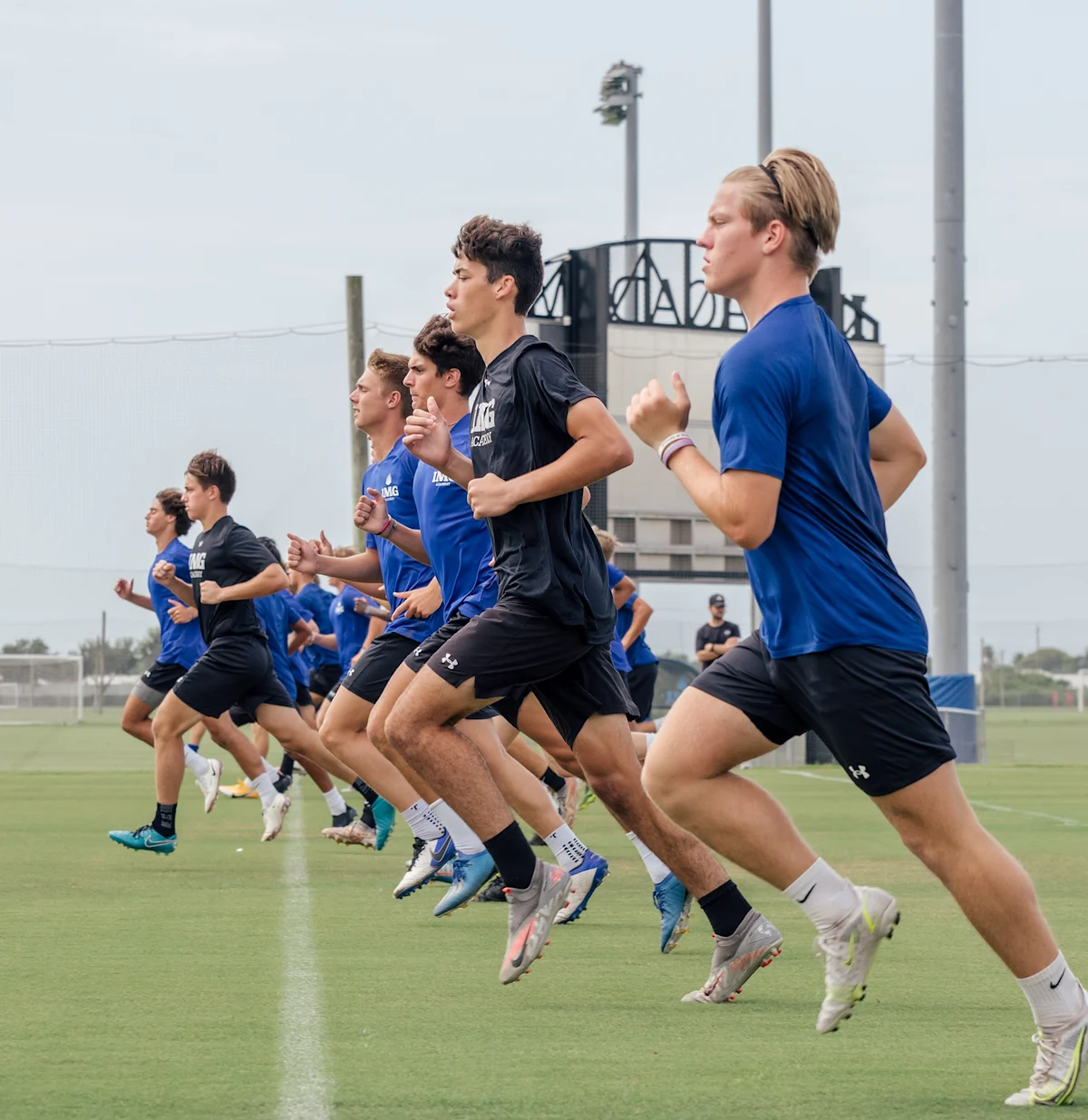
Speed drills help athletes improve acceleration, sprint mechanics, explosiveness and body control. For middle and high school athletes, the best starter speed drills focus on force production, posture, rhythm and short-distance acceleration that carries over to the field, court or track.
Whether you're trying to get off the line faster, close space on an opponent or build a stronger first step, these five beginner-friendly drills can help you develop the foundation for better acceleration.
Expert insight
As a strength and conditioning coach at IMG Academy, I have worked with legendary sprint coach Loren Seagrave. Using his approach, I went on to strength and conditioning roles at several major conference colleges, achieving dramatic results. At IMG Academy, I enjoy helping some of the world's top high school athletes prepare for the next level.
Why Speed Drills Matter for Athletic Performance
Speed drills help athletes build the quickness, explosiveness and body control needed to move more effectively in competition. In most sports, athletes rarely sprint in a straight line for long distances. Instead, they accelerate over short spaces, react to opponents, chase balls, change direction and create separation.
Practicing speed drills can help athletes improve their first step, develop better movement patterns and apply more force into the ground. For middle and high school athletes, these drills are especially valuable because they build a foundation for faster starts, sharper transitions and more confident movement on the field, court or track.
How Speed Drills Improve Acceleration and Mechanics
Speed drills improve acceleration by teaching athletes how to push into the ground, control body position and coordinate their arms and legs efficiently. During acceleration, athletes spend more time with their feet on the ground as they drive forward, making proper posture, force production and rhythm essential.
The best speed drills break acceleration into smaller pieces so athletes can practice each component before putting everything together in a sprint. Medicine ball throws and broad jumps develop explosive power, wall drills reinforce body position and mechanics, sled drills add resistance, and short sprints allow athletes to apply those skills in full-speed movement.
5 Best Speed Drills for Athletes
I recommend a part-to-whole approach to improving acceleration by breaking the movement into individual components that develop the motor patterns and techniques needed for greater explosiveness on the field, court or track.
An individualized approach will always work best because a qualified coach can identify the inefficiencies holding an athlete back. However, the following five drill types provide an excellent place to start.
1. Medicine Ball Throws
Medicine ball throws help develop starting strength. Elite throwers are often just as fast as top sprinters during their first few steps because strength is a major contributor to initial explosiveness.
Medicine ball exercises such as overhead throws and lunge throws help your body develop the power needed to explode off the line and accelerate more effectively.
2. Broad Jumps
Broad jumps are highly correlated with sprint speed, and bounding exercises can help improve acceleration. Focus on driving forcefully into the ground with stiff ankles and a powerful double-leg push to propel yourself forward.
This movement teaches your body to produce a large amount of force in a short amount of time, which is one of the keys to faster acceleration.
3. Wall Drills
Wall drills are an important part of the part-to-whole approach because they train the nervous system to move more efficiently while reinforcing proper acceleration mechanics.
To perform a wall drill, lean against a wall in an acceleration position and mimic the leg action used during sprinting without moving forward. Pay close attention to posture, rhythm, form and driving forcefully into the ground with every repetition.
4. Sled Drills
Once your body becomes comfortable with wall drills, progress to performing the same movements while pushing a sled. Using the same mechanics against added resistance teaches your body to apply greater force into the ground.
Sled drills build strength while reinforcing the same acceleration mechanics practiced during wall drills.
5. Sprinting
Finally, practice the complete movement with open sprints. Sprinting allows you to connect the strength developed through medicine ball throws and broad jumps with the mechanics refined through wall and sled drills.
For the greatest long-term improvement, progress from wall drills to sled drills and then to open sprints. During each phase, maintain the same posture, arm action and force application you've practiced throughout the progression.
Speed Drill Progression for Beginners
Building speed is most effective when athletes progress from developing raw power to applying that power in full-speed movement. Each drill builds on the previous one, helping reinforce the mechanics and force production needed for better acceleration.
Step | Drill Focus | Example | Primary Goal |
1 | Starting strength | Medicine ball throws | Develop explosive power for the first few steps. |
2 | Horizontal force production | Broad jumps | Learn to push forcefully into the ground and project the body forward. |
3 | Sprint mechanics | Wall drills | Reinforce acceleration posture, rhythm and body position. |
4 | Resisted acceleration | Sled drills | Increase force production while maintaining proper mechanics. |
5 | Full-speed acceleration | Short sprints | Apply strength and technique to unrestricted sprinting. |
Master each phase before progressing to the next. As your technique improves, gradually increase speed and intensity while maintaining proper posture, powerful ground contact and efficient sprint mechanics.
Are Speed Ladder Drills Effective for Speed?
Speed ladder drills can help athletes improve foot coordination, rhythm, balance and body control, but they should not replace sprinting, jumping or acceleration work. To develop true speed, athletes must learn to apply force into the ground and practice sprint mechanics over short distances.
For beginners, speed ladder drills are most effective as part of a dynamic warmup or movement preparation routine. They work best when paired with wall drills, broad jumps, sled pushes and short sprints that develop acceleration and power.
How to Use Speed Ladder Drills Correctly
When performing speed ladder drills, focus on posture, balance and quick ground contact rather than simply moving your feet as fast as possible. Keep your hips tall, maintain good body control and move with purpose through every repetition.
If your technique begins to break down, slow the drill, reset your posture and continue only when you can maintain proper mechanics. Consistent, high-quality movement will produce better long-term results than rushing through the ladder.

Get discovered by college coaches
Reading about recruiting is a great start, but the families who land scholarships don't do it alone. NCSA's Recruiting Coaches build a personalized strategy around your game, academics, and target schools so you stand out to the right programs.
How Often Should Athletes Do Speed Drills?
Most athletes can benefit from speed drills two to three times per week, depending on their sport, training schedule and recovery. High-intensity acceleration drills should be performed when athletes are fresh, with enough rest between repetitions to maintain proper mechanics.
Speed drills should not become conditioning workouts. If your posture breaks down, sprint times slow or you begin feeling heavy and fatigued, it's usually time to stop or reduce the intensity.
Common Mistakes When Doing Speed Drills
Athletes often make a few common mistakes that limit their ability to develop speed and acceleration.
Going Too Fast Too Soon
Master posture, rhythm and technique before trying to move at maximum speed. Building good mechanics first leads to better long-term results.
Turning Speed Drills Into Conditioning
Speed training requires high-quality repetitions and full recovery between efforts. Fatigue reduces power output and reinforces poor movement patterns.
Poor Posture
Maintaining proper body position is essential for producing force efficiently. Poor posture limits acceleration and increases the risk of inefficient movement.
Skipping Sprinting
Speed drills improve individual components of acceleration, but athletes still need to practice sprinting to apply those skills in real movement.
Using Too Much Resistance
Sleds and other weighted training tools should reinforce sprint mechanics, not change them. If the resistance is too heavy, athletes may lose proper technique.
Other Tools for Building Acceleration
Medicine ball throws, broad jumps, wall drills, sled work and short sprints provide an excellent foundation for acceleration, but they are not the only tools available.
If you have access to a hill, hill sprints help build the same muscles used during acceleration while naturally encouraging proper body angles. Weighted vests and acceleration ladders can also add variety to training by providing additional resistance and reinforcing movement mechanics when used appropriately.
Final Tips to Build Speed and Acceleration
Building speed and acceleration takes consistent, high-quality practice. Start with foundational drills that teach posture, force production and rhythm before progressing to resisted work and short sprints as your mechanics improve.
Always focus on quality over quantity. Speed training should be performed when you're fresh, with enough recovery between repetitions to maintain proper technique. If your form breaks down, sprint times begin to slow or you feel excessively fatigued, reduce the intensity or end the session.
For the best results, combine speed drills with sprint training, strength development, mobility work and proper recovery. Over time, this balanced approach can help athletes develop a faster first step, better acceleration and more explosive movement in competition.
FAQs About Speed Drills
What are the best speed drills for athletes?
Some of the best speed drills for athletes include medicine ball throws, broad jumps, wall drills, sled drills and short sprints. These drills help build power, acceleration mechanics and the ability to apply force into the ground.
How do speed drills improve performance?
Speed drills improve performance by helping athletes accelerate faster, move more efficiently and produce more force in short spaces. This can help athletes in sports that require quick starts, changes of pace and explosive movement.
Are speed ladder drills good for speed?
Speed ladder drills can help with coordination, rhythm and foot quickness, but they do not build true speed on their own. They are most effective when paired with sprinting, strength training, jumping and acceleration drills.
How often should athletes do speed drills?
Most athletes can do speed drills two to three times per week, depending on their training load and recovery. High-intensity drills should be done when athletes are fresh and should stop when mechanics break down.
What speed drills help beginners?
Beginners should start with medicine ball throws, broad jumps, wall drills and short acceleration sprints. These drills teach basic power, posture and force production before progressing to more advanced sprint work.